05. Framework to Prioritize Backlog
ND036 C3 L4 02.3 Prioritizing Product And Sprint Backlog
Framework Summary
Emergent Issues
- 5 to 10% of the sprint velocity
- The significant impact of this issue requires the fix to be rolled out as soon as possible independent of the release following the Sprint ends. Such fixes are usually called as hotfix since they are outside the release cycle. The QA team members, development team and product managers conduct a series of focused manual testing and in some instances automated regression testing to ensure the fix is not breaking other existing features or creating new issues.
Metric Movers
- Most important bucket
- 70% - 75% of the sprint velocity
- Focuses on roadmap initiative with the features broken down and prioritized by user stories and requirements
Customer and Stakeholder Requests
- 10% - 15% of the sprint velocity
- Important to address critical issues and requests identified by users in a timely fashion
ND036 C3 L4 02.4 Prioritizing Product And Sprint Backlog
Framework continued
Customer Delights
- 5 to 10% of the sprint velocity
- Focuses on surprises for the customers - the trivial visually confusing or irritating design issues that will delight customers
- Having a small bucket at the end of the backlog to address such things also motivates your engineering team members and does not affect the morale of stakeholder because these small Delights have a very small percentage of points allocated
Prioritizing Product and Sprint Backlog Recap
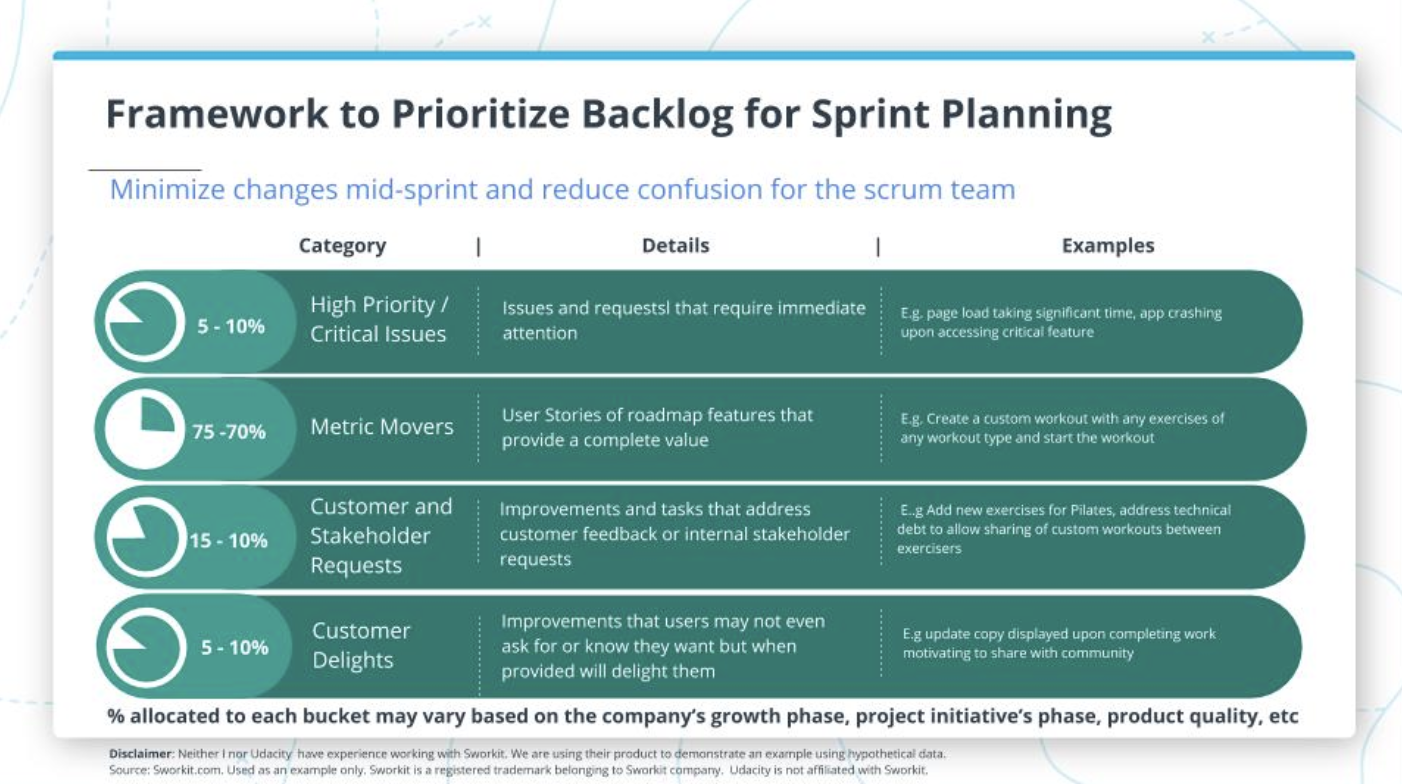
Framework to Prioritize Backlog for Sprint Planning
Prioritizing Product and Sprint Backlog Recap
Effective prioritization is key to maintaining a balance between developing and launching roadmap initiatives, addressing customer requests (including internal stakeholders) and bugs. A prioritized product and sprint backlog help you (as a PM) stay on track to meet product goals while handling issues that arise constantly and keeping the development team focused on building what matters the most.